Chatting across languages: when the translation is right but the meaning isn’t
Written by the team that makes Dotok. Free options come first.
In short
- The shorter the message, the more it drifts when translated without the one before it.
- Some cultures say it sideways — a no can arrive as “we’ll consider it”.
- Translate it with the message before it, and when it’s unclear, asking is the most accurate.
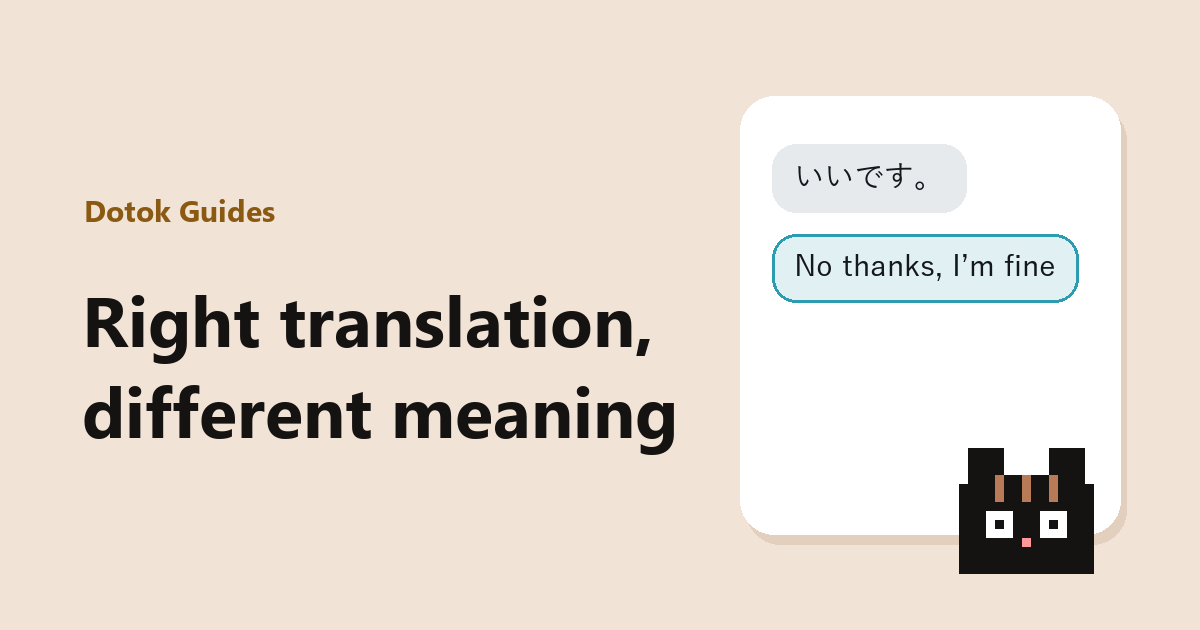
A translator carries the sentence across. It doesn’t tell you how that sentence reads in its own culture.
Phrases that trip people up
日本語 · after offering another drink
もう一杯どうですか?
いいです。
Sentence aloneGood.
With the conversationNo thanks, I’m fine.
한국어 · after you say you’ve arrived
응, 어제 도착했어!
잘 왔어. 밥은 먹었어?
Sentence aloneWelcome. Did you eat?
With the conversationGlad you made it. Have you eaten? (a warm hello)
Bahasa Indonesia · after asking for a date
Kapan kita ketemu?
Nanti ya
Sentence aloneLater, okay
With the conversationLater (no time set yet)
A translation that adds one line of meaning
Dotok, the app we make, adds a one-line note to phrases that read differently even when the translation is correct.
日本語 → English · tap for Original · 10:12
In Japanese business this set phrase usually means a polite no, not a yes. Don’t count on it.
If you read with another translator
- Paste a short answer together with the message before it.
- When yes or no is unclear, ask back. “Is that a yes?”
Meaning notes are a guide. They vary with the person and the relationship.
FAQ
- Does Dotok add an explanation to every message?
- No. Only phrases that can read differently get one line. Most messages come back as translation alone.
Read next
 How to translate Korean chat messages and reply in KoreanHow to translate Korean messages on KakaoTalk and WhatsApp, the Korean texting abbreviations translators get wrong (ㅋㅋ, ㅇㅇ, ㄱㅅ, ㄱㅊ), and how to write a reply in Korean.
 How to auto-translate WhatsApp messages as they arriveThree ways to translate incoming WhatsApp messages automatically instead of one by one: WhatsApp auto-translate, Galaxy AI Chat translation and an overlay translator, with their limits.
 WhatsApp translator apps: which one fits your situationWhich app or feature to use for translating WhatsApp chats, by situation. WhatsApp’s built-in translation, Gboard, Google Translate, Galaxy AI and an overlay translator compared in one table.